What happens when a sunrise is interrupted?
In See What They’ve Done To Our SunRise: New Poems from an Old Loom, Kofi Anyidoho returns with a collection that sits between lament and possibility between what has been lost and what might still be reclaimed. With a foreword by Mawuli Adjei, this new collection invites readers into a poetic landscape shaped by memory, history, and enduring hope.
Rather than offering easy answers, the collection lingers in tension. The “sunrise” becomes more than an image, it is promise disrupted, dreams deferred, and yet, not entirely extinguished.
Across the poems, there is a steady movement between sorrow and resilience. Loss is present—deeply felt—but never allowed to have the final word. Love, memory, and distance are revisited not as endings, but as evolving relationships, shaped by time and circumstance.
Here, nostalgia is not simply longing. It becomes a way of returning, reclaiming fragments of people, places, and moments that refuse to disappear.
One of the most striking aspects of this work is its structure. The poems unfold in four “movements,” echoing musical composition and reflecting Anyidoho’s grounding in Anlo musical traditions. The result is a reading experience that feels less like a static collection and more like a journey, layered, rhythmic, and alive.
Each movement i.e. Nostalgia, Blues for the Land, A Bouquet for Ancestral Souls and Husago carries its own emotional weight, yet together they form a continuous arc—moving through memory, grief, homage, and ultimately, renewal.
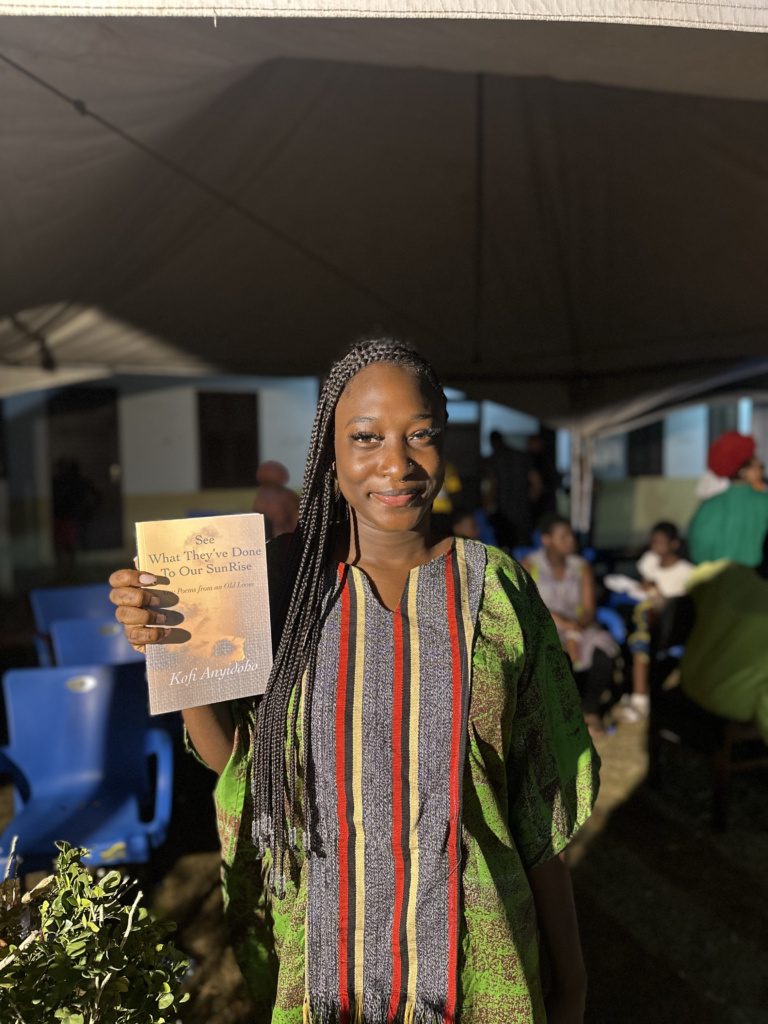
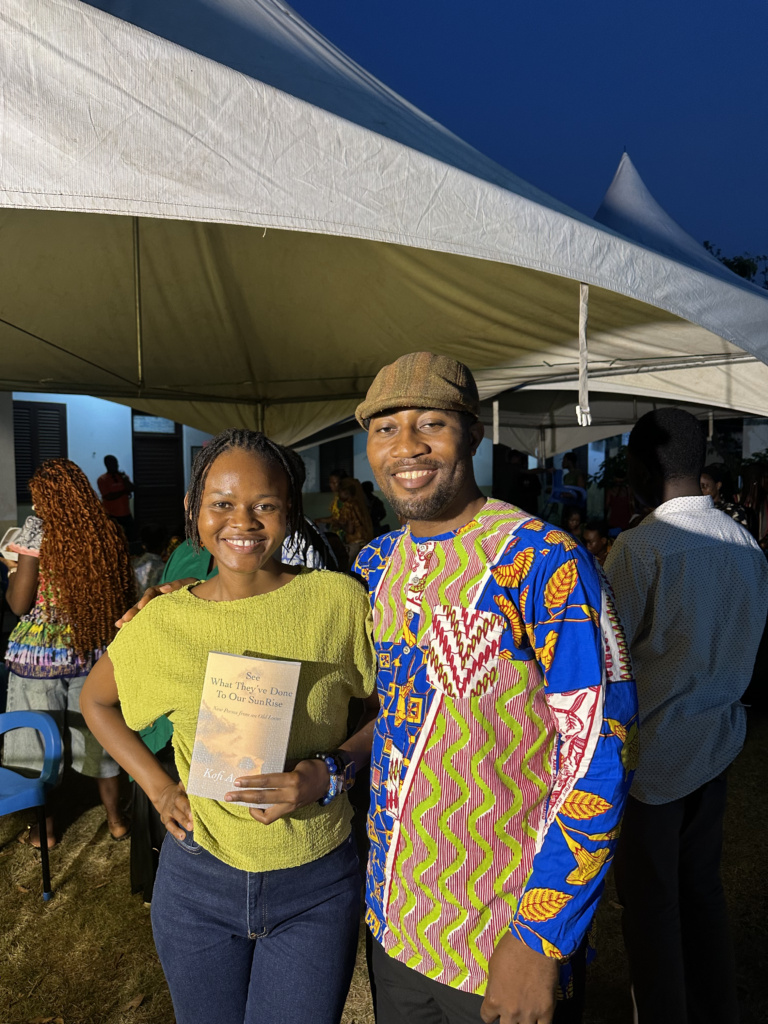
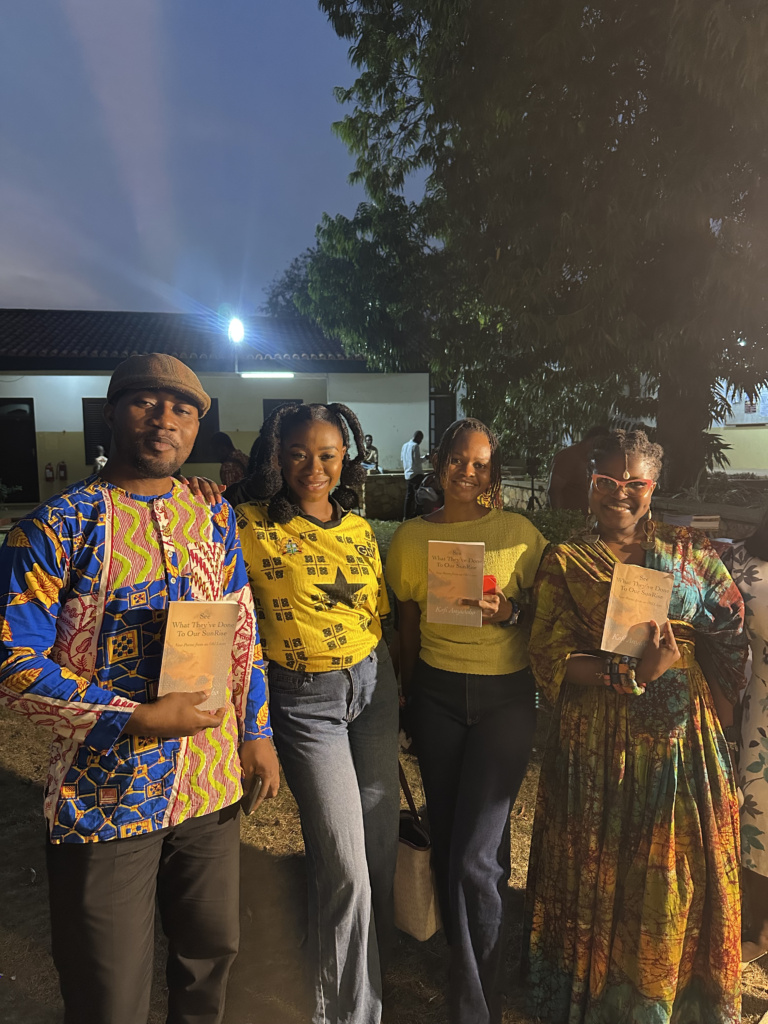
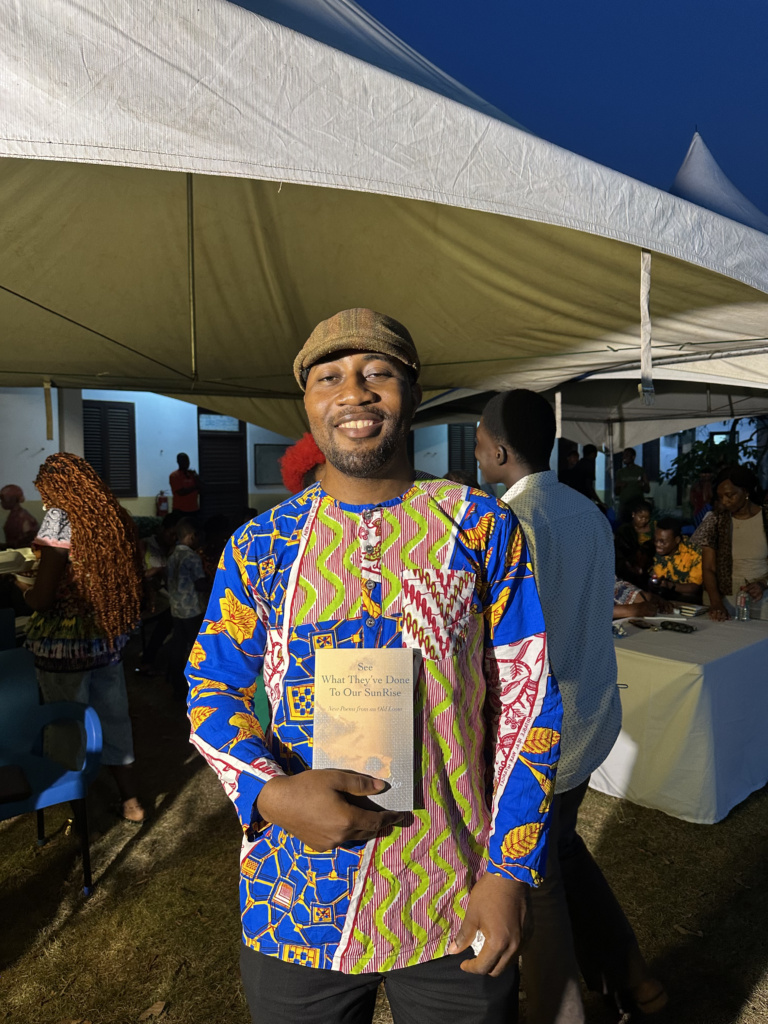
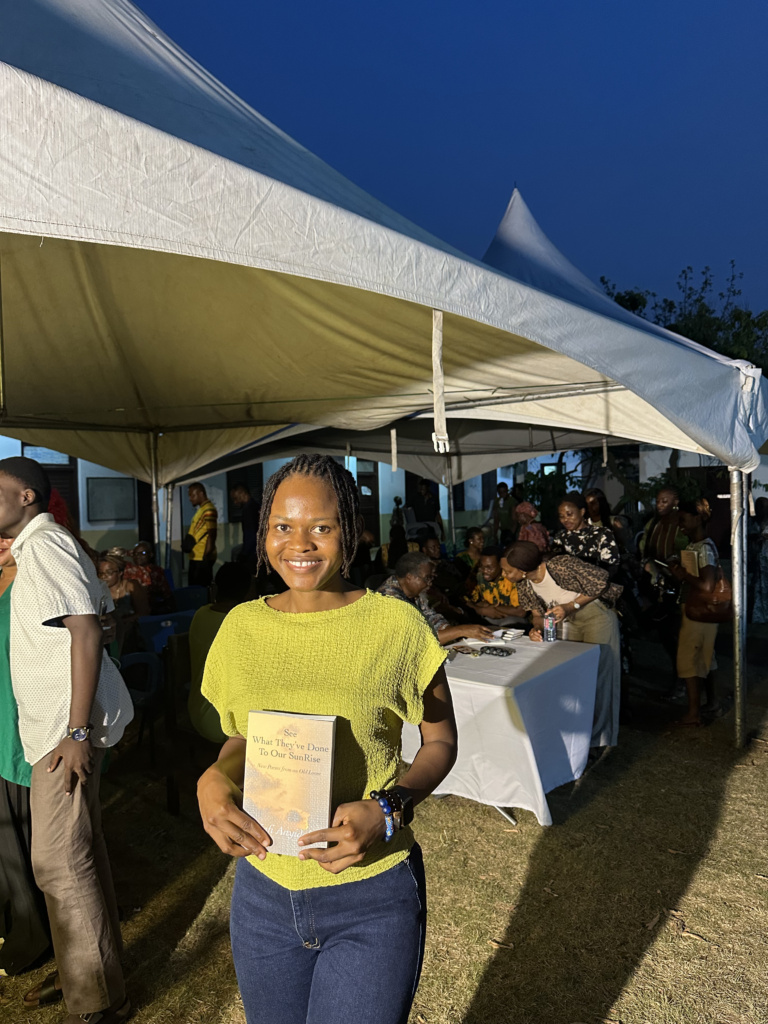
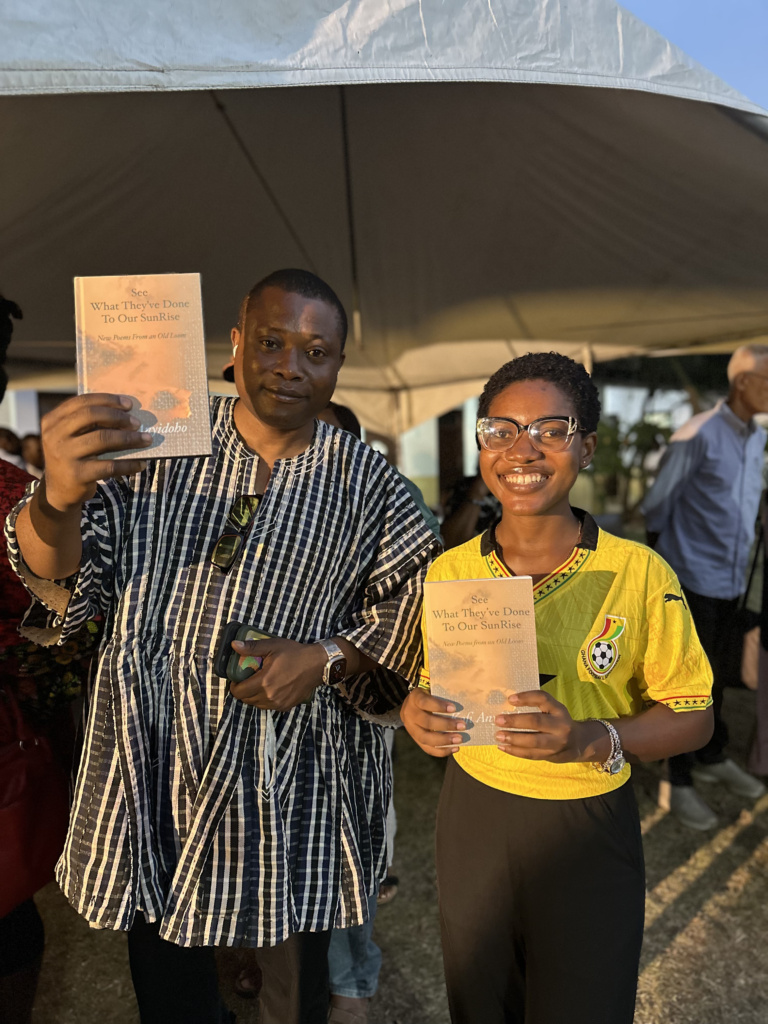
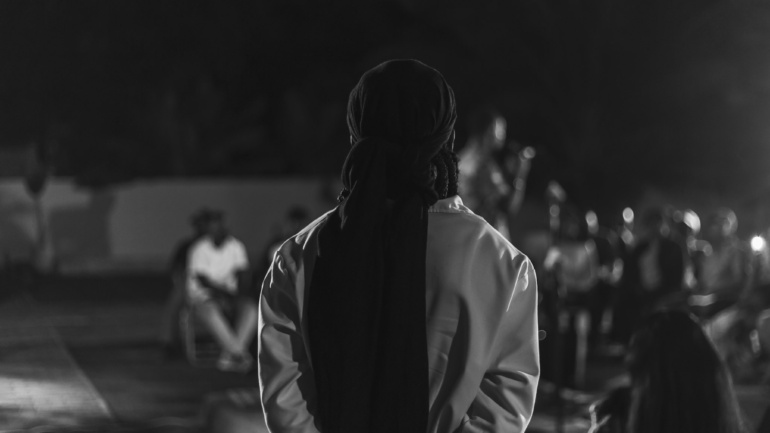
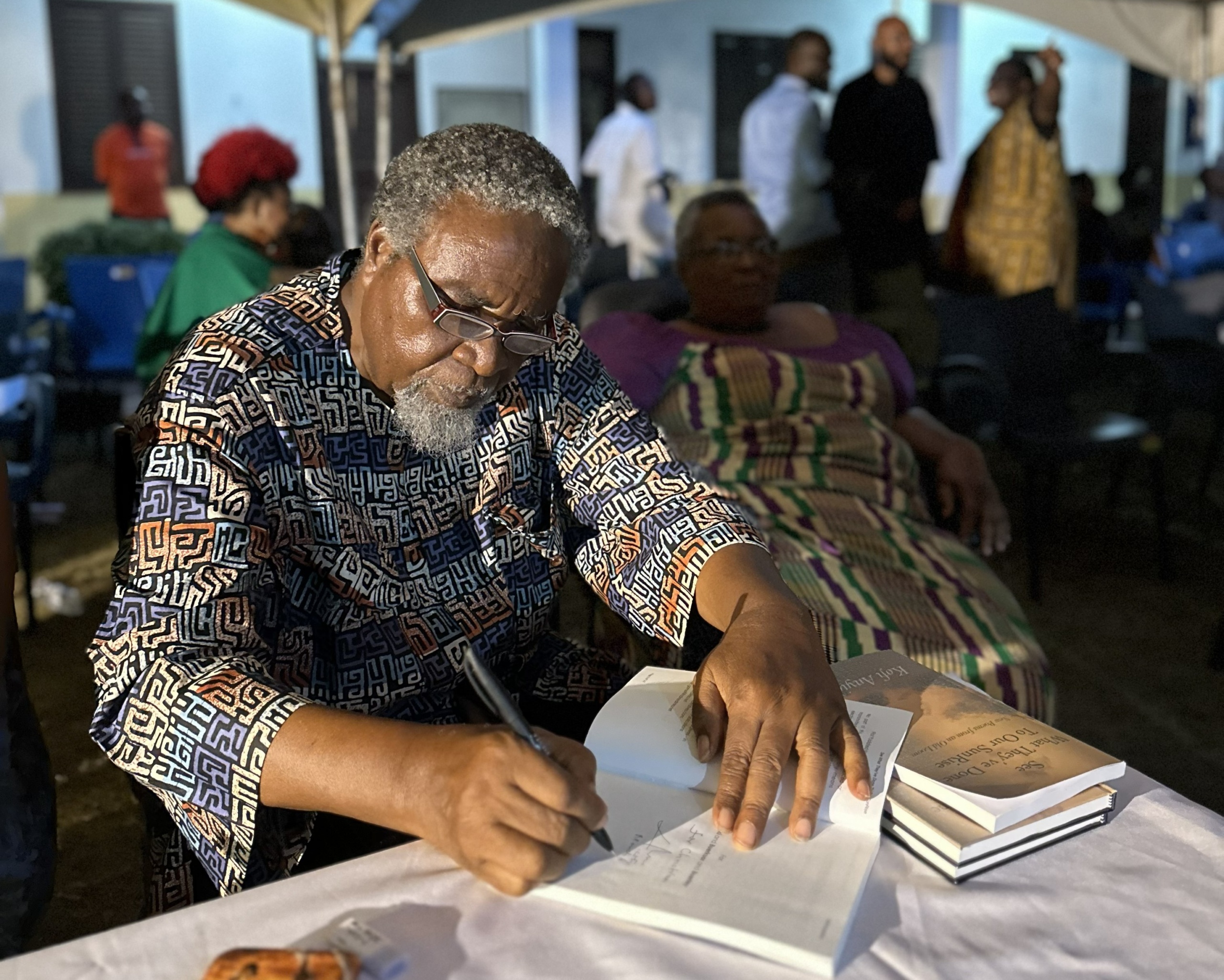
Images: Museum of African Poetry at the launch of See What They’ve Done To Our SunRise, AdinkraLinks
in partnership with the School of Performing Arts, the Institute of African Studies and the Department of English,
at the Institute of African Studies, Old Site Forecourt. University of Ghana, Legon on March 6, 2026.
In See What They’ve Done To Our SunRise, darkness and light exist side by side. The poems do not turn away from pain, but neither do they surrender to it. Instead, they hold space for something more complex: a recognition that even in disruption, there remains the possibility of return, of rebuilding, of another dawn.
This is a collection that asks readers not only to reflect, but to feel, to remember, and to imagine again.
The end.